
What is an AI Token? A Simple Guide for Business Owners
If you've started using AI for your business, you've probably heard the term 'token.' Think of tokens as the building blocks of AI language—like LEGO bricks for text. Large Language Models (LLMs) like ChatGPT don't read sentences like humans do; instead, they break everything down into these tokens


If you've started using AI for your business, you've probably heard the term 'token.' Think of tokens as the building blocks of AI language—like LEGO bricks for text. Large Language Models (LLMs) like ChatGPT don't read sentences like humans do; instead, they break everything down into these tokens to understand, process, and generate responses. Understanding what tokens are is the key to controlling your AI costs and getting better, more efficient results.
Key Takeaways: Putting Tokens to Work
- Budget for AI by remembering the rule of thumb: 1 token is roughly 4 characters or three-quarters of a word in English.
- Before running a large task, use a free online 'token calculator' to estimate how much it will cost and how much of the model's 'memory' it will use.
- Write shorter, clearer prompts. Be concise and direct to save tokens on every request, which reduces your overall spending.
- Compare the 'context window' (the maximum token limit) of different AI models before you commit. A larger window allows for longer documents and conversations but often costs more.
- Regularly check the usage dashboard in your AI provider's account (like OpenAI or Anthropic) to monitor your token consumption and avoid surprise bills.
- Remember that different models use different tokenizers. The same sentence will have a different token count in GPT-4 versus Claude, impacting both cost and capabilities.

Table of contents
- How Do AI Models Actually 'Read' Your Prompts?
- What Exactly Counts as a Single Token?
- Why Are Some Words More 'Expensive' Than Others?
- How Do Tokens Directly Affect Your AI Costs?
- What Is a 'Context Window' and Why Does It Matter for Business?
- How Can You Count Tokens Before Running a Task?
- Can You Use Fewer Tokens to Get the Same Results?
- Do Different AI Models Count Tokens Differently?
- How Is Information Encoded After Tokenization?
- Beyond Text: Do Image and Audio Models Use Tokens?
- Conclusion and Next Steps
- Frequently asked questions
- Additional Resources
How Do AI Models Actually 'Read' Your Prompts?
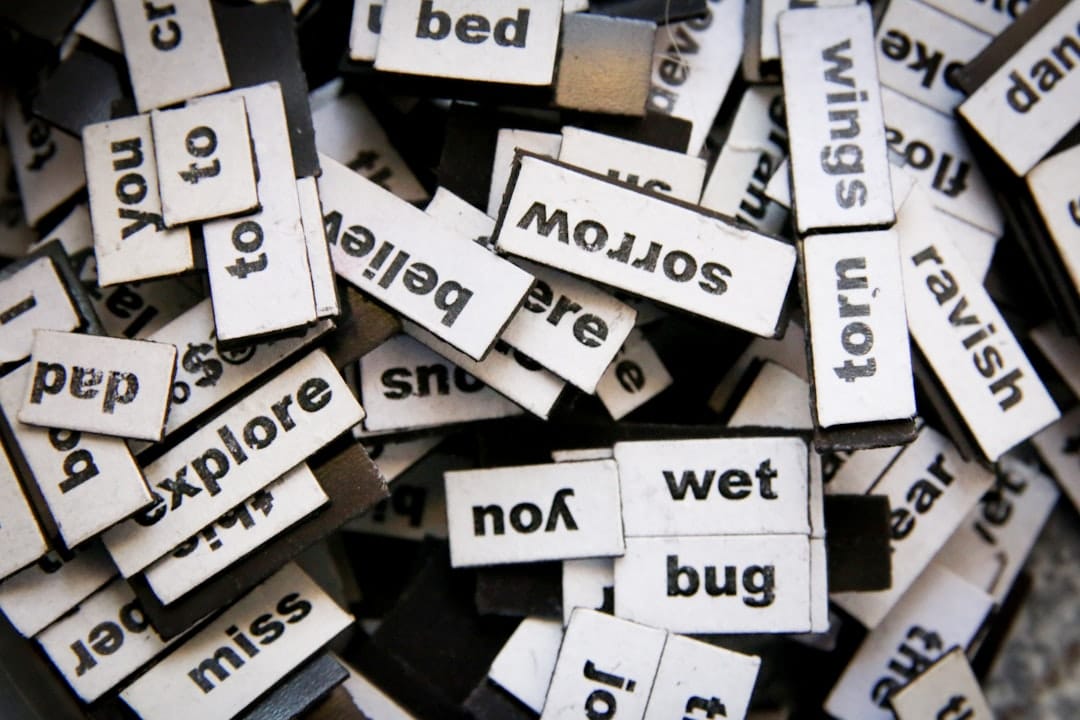
AI models 'read' text by breaking it down into smaller units called tokens through a process known as tokenization. This isn't like human reading; instead, the AI converts your words into a numerical representation it can mathematically process. The model then operates on these numerical sequences, predicting the next most likely token to form coherent responses. For instance, an AI architecture starts with your sentence, passes it through a "Tokenizer" to break it into discrete tokens, converts these tokens into numerical IDs, and then feeds these numbers into the core Large Language Model (LLM) for processing.
What Exactly Counts as a Single Token?
A token is typically a common word, a part of a longer word, a punctuation mark, or even a space. For example, "automation" might be a single token, but "tokenization" could be broken down into "token" and "ization" by the AI model. Punctuation like commas and periods are usually counted as their own tokens, as are special characters and sometimes leading spaces that affect word separation. The sentence "AI is powerful." could be tokenized into five distinct units: ['AI', ' is', ' powerful', '.',].
Why Are Some Words More 'Expensive' Than Others?
Certain words are more 'expensive' in terms of token count because they are rare, long, or even misspelled, leading the AI to break them into multiple smaller pieces. Tokenization algorithms, like Byte-Pair Encoding (BPE), learn to group common character sequences into single tokens from vast amounts of text. A common word like "business" will likely be a single token, but a made-up or very specific term like "BizCorpSol" might be split into "Biz," "Corp," and "Sol," costing three tokens. This subword approach allows the AI to handle virtually any word by breaking it down into familiar character combinations.

How Do Tokens Directly Affect Your AI Costs?
Your AI costs are directly linked to the number of tokens you process, as most AI services charge based on token usage, often per 1,000 or 1 million tokens. This pricing applies to both the tokens you send to the model (input, your prompt) and the tokens the model generates in its response (output). For a small business owner, this means that processing a lengthy document like a 10-page report will incur higher costs than a brief, simple question. Many AI models also differentiate pricing, with output tokens sometimes being more expensive than input tokens.

What Is a 'Context Window' and Why Does It Matter for Business?
A model's context window refers to its short-term memory, measured in tokens, which dictates how much information it can consider simultaneously. This limit encompasses both your prompt and the AI's generated response, meaning a long-running conversation or a very large document can quickly consume the available token space. For a business, a small context window might prevent an AI from analyzing an entire sales report, whereas a larger window can accommodate more complex, multi-turn interactions and extended documents, leading to more comprehensive analysis. Comparing context window sizes, such as 4k, 16k, 128k, or even 200k tokens, across models like GPT-3.5, GPT-4 Turbo, and Claude 3 is crucial for selecting the right tool for tasks involving long texts or dialogues.

How Can You Count Tokens Before Running a Task?
You can accurately estimate your token usage by employing free, online token calculator tools provided by AI developers like OpenAI. By pasting your text into these tools, you can see the precise token count according to the specific model's tokenizer. For a quick, on-the-fly approximation, remember the general guideline: one token is roughly equivalent to four characters or 75% of a word in English. This workflow helps you to visually: 1. Copy the text you intend to send. 2. Paste it into an online Tokenizer tool. 3. Obtain the exact token count. 4. Make an informed decision about whether to proceed based on projected cost or token limits.
Can You Use Fewer Tokens to Get the Same Results?
Yes, you can significantly reduce token usage by crafting clear, concise prompts and eliminating unnecessary words or phrases. Instead of lengthy, conversational instructions, opt for direct commands, keywords, and bullet points to guide the AI. For multi-step processes, it's more efficient to define the AI's role and desired format once in a "system prompt" rather than repeating instructions within every message. Refining your prompts not only lowers costs but often leads to faster and more precise outcomes from the AI.
Do Different AI Models Count Tokens Differently?
Indeed, different AI models employ unique tokenizers, meaning the same piece of text can translate into varying numbers of tokens and associated costs across different platforms. For example, OpenAI's GPT models utilize a tokenizer known as 'cl100k_base,' while Google's Gemini and Anthropic's Claude models use their own distinct methods, such as SentencePiece. This is why a 1,000-word document might have a different processing cost with GPT-4 compared to Claude 3. It's essential to consult the specific documentation for the AI model you are using to understand its tokenization process and pricing accurately.
How Is Information Encoded After Tokenization?
Once text is broken down into tokens, each token is assigned a unique numerical ID from the model's extensive vocabulary. This sequence of numbers is then transformed into vectors—complex lists of numbers known as 'embeddings'—which capture the token's meaning and its relationship to other tokens. The AI model processes these numerical embeddings, rather than the raw text, to grasp context, nuances, and instructions within your prompt. This numerical representation is fundamental for the mathematical calculations that occur within the neural network to generate a relevant response.
Beyond Text: Do Image and Audio Models Use Tokens?
The concept of tokens is not limited to text; it extends to AI models that process other forms of data like images, video, and audio. For image processing AI, the equivalent of a token is often a small patch or segment of the image that the AI learns to identify and associate. Similarly, audio processing models break down sound waves into small, analyzable chunks that function as tokens. In multimodal AI, these different input types (text, image, audio) are all processed by their respective tokenizers to create a unified token representation that a single AI model can understand and work with.
Conclusion and Next Steps
Understanding AI tokens is fundamental to effectively and affordably utilizing artificial intelligence in your business. By recognizing tokens as the basic units of data that AI models process, you gain control over costs, improve efficiency, and enhance the quality of AI-generated outputs. Whether for text, images, or audio, tokens are the lingua franca of AI that enable its sophisticated capabilities.
Here are three concrete actions you can take today:
- Use a Token Calculator: Before undertaking any significant AI task, utilize a free online token calculator to estimate your token usage and potential costs.
- Practice Concise Prompting: Revise your common AI prompts to be more direct and less conversational, focusing on essential keywords and direct instructions.
- Compare Model Context Windows: If your work involves analyzing long documents or maintaining extended conversations, research and compare the context window sizes of different AI models to find the best fit for your needs.
Frequently asked questions
What is a token in generative AI, with an example?
A token is the fundamental unit of data that generative AI models process. Instead of reading words as humans do, AI breaks text down into these smaller parts. For example, the sentence 'Hello, world!' might be tokenized into four tokens: 'Hello', ',', ' world', and '!'.
Why is a token roughly 3/4 of a word?
While many short, common words are treated as a single token, longer or less common words are often split into multiple token pieces. Punctuation marks and spaces also consume tokens. When averaged across a large amount of English text, this breakdown results in, on average, about 0.75 words per token.
Are input tokens and output tokens priced the same?
They are often priced differently. Output tokens, which are generated by the AI in response to your prompt, are frequently more expensive because creating them typically requires more computational power than simply processing the input tokens.
What happens if my prompt and the response exceed the context window?
If the total number of tokens in your prompt and the AI's intended response exceeds the model's context window, the AI will likely produce an error. In a conversational setting, it might also 'forget' the earlier parts of the interaction, leading to a loss of context and potentially confused or irrelevant responses.
Does punctuation count towards my token limit?
Yes, absolutely. Punctuation marks such as commas, periods, and question marks are treated as individual tokens. They contribute to the total token count of your prompt or response and, consequently, to your overall AI usage cost.
How do I choose an AI model with the right context window for my business?
Consider your primary use case. If your business frequently needs to summarize lengthy reports, legal documents, or complex codebases, a large context window (e.g., 100k tokens or more) is essential. For simpler tasks like drafting emails, answering basic questions, or generating short content, a smaller, more cost-effective window (e.g., 4k to 16k tokens) might suffice.
Can I check how many tokens a specific phrase is?
Yes. You can use free online tools, such as OpenAI's Tokenizer, by pasting your text directly into the interface. This will show you the exact token count for that specific text, according to the tokenizer used by a particular AI model.
Does changing one word in my prompt affect the token count?
Yes. Substituting a short, common word for a longer, less common one can increase the token count. For example, changing 'car' (likely 1 token) to 'automobile' (still likely 1 token, but longer) might not change it, but changing it to 'Rolls-Royce' (which would likely be tokenized into 2 or more parts) would increase the token count.
What is the difference between a token and a character?
A character is a single letter, number, symbol, or space. A token is a unit of text that an AI model treats as a single piece of information. Typically, one token is composed of multiple characters; in English, this averages out to about four characters per token.
How is token usage related to my Zapier bill?
When you use AI actions within Zapier (for example, connecting to OpenAI or Anthropic services), each execution of that AI step consumes tokens. The total number of tokens used by Zapier for all your AI tasks is then billed to you by the respective AI provider (e.g., OpenAI, Anthropic), not by Zapier itself. Zapier facilitates the connection and execution of these AI tasks.


